Continuous Viable Particle Monitoring for Critical Environments.
A practical guide to choosing, validating and implementing a viable air monitoring system for EU GMP Annex 1.
Get Your Copy Here
ImpactAir Bruchure Form
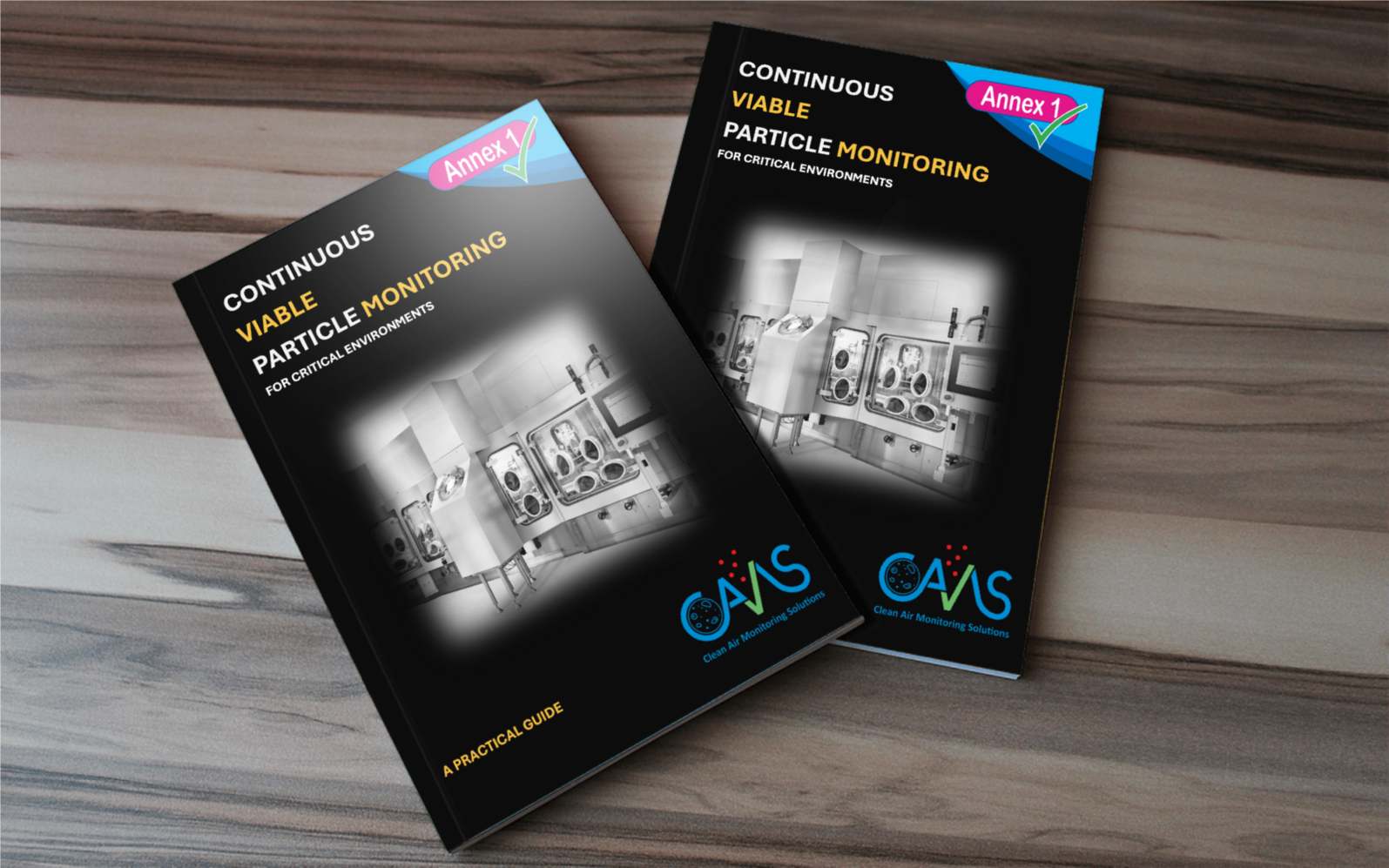
Continuous Viable Particle Monitoring for Critical Environments
Meeting Annex 1 requirements isn't simply about monitoring continuously. Your chosen method must be scientifically justified, capable of recovering the microorganisms that matter, and able to demonstrate its performance through validation.
The latest CAMS guide looks beyond individual products to examine the different approaches to viable environmental monitoring, the science behind them, and the questions pharmaceutical manufacturers, cleanroom operators and equipment designers should consider when selecting a system.
If you're reviewing your environmental monitoring strategy, designing a new facility or isolator, or questioning whether your existing approach will stand up to scientific and regulatory scrutiny, this guide is a useful place to start.
In this guide:
- The essential requirements for a scientifically justified and validated Annex 1 monitoring system
- The importance of particle collection efficiency, impact velocity, microbiological recovery and measurable air volumes
- The strengths and limitations of settle plates, sieve samplers and real-time laser-induced fluorescence
- Why continuous slit-to-agar monitoring combines established microbiology with long-duration sampling and species-level identification
- How CAMS' modular approach can support everything from a single monitoring point to large-scale installations, with common validation, controls and MODBUS integration
- The latest CAMS solutions for isolators, RABS and cleanrooms, including the ISO-90 Hero, multi-head monitoring and ISO-CON remote pump systems CAMS
- How existing sampling installations can be upgraded to continuous Annex monitoring using CAMS remote-pump solutions.