Gethin’s Diary: Designing the Right Monitoring System for Your Cleanroom
Flexibility Matters.
One of the biggest misconceptions in environmental monitoring is that there’s a single “correct” way to do it.
In reality, cleanrooms and aseptic environments vary enormously. The airflow patterns are different. The constraints are different. The process risks are different. The physical build is different. The people working in them are different.
So why do so many monitoring solutions assume one fixed configuration will suit everyone?
In this entry of Gethin’s Diary, I want to talk about something we’ve learned the hard way over the years:
The best monitoring system is the one that fits your environment, not the one that forces your environment to fit it.
Cleanroom monitoring is never one-size-fits-all
Even within the same company, two sites can have completely different realities:
- legacy facilities with awkward infrastructure
- new builds with modern isolators and high automation
- Grade A spaces where sampling must run for long periods
- RABS environments where integration and validation simplicity is the priority
- facilities where downtime is simply not an option
Yet many monitoring systems are offered like a “boxed product”: fixed format, fixed assumptions, limited options.
That might be fine in a simple lab setting. But in aseptic manufacturing, it often creates workarounds, and workarounds create risk.
Flexibility isn’t a “nice to have”. It’s a risk control.
When people hear “flexible”, they sometimes think it means more features or more complexity.
That’s not what I mean.
What matters is flexibility in the way the system can be deployed, so you can meet your monitoring goals without:
- complicated engineering
- unnecessary shutdowns
- awkward validation justifications
- or forcing compromises in where and how you sample
In other words, flexibility is about control.
Control over your sampling strategy. Control over how the system fits into your facility. Control over how you adapt as your process changes.
The hidden cost of rigid systems
When a system is rigid, you usually see the same issues crop up:
- Sampling points chosen based on what the hardware can reach, not where the risk actually is
- Major engineering changes required just to install or upgrade
- Validation burden increases because you’ve introduced unnecessary change
- Maintenance becomes painful, especially in hard-to-access areas
- Teams accept “good enough” coverage because the ideal layout feels unrealistic
Over time, those compromises become part of the norm, until an investigation or an audit forces the question: is the system actually designed around risk?
What “design your own solution” really means
At CAMS, when we talk about flexibility, we’re talking about real-world deployment choices, such as:
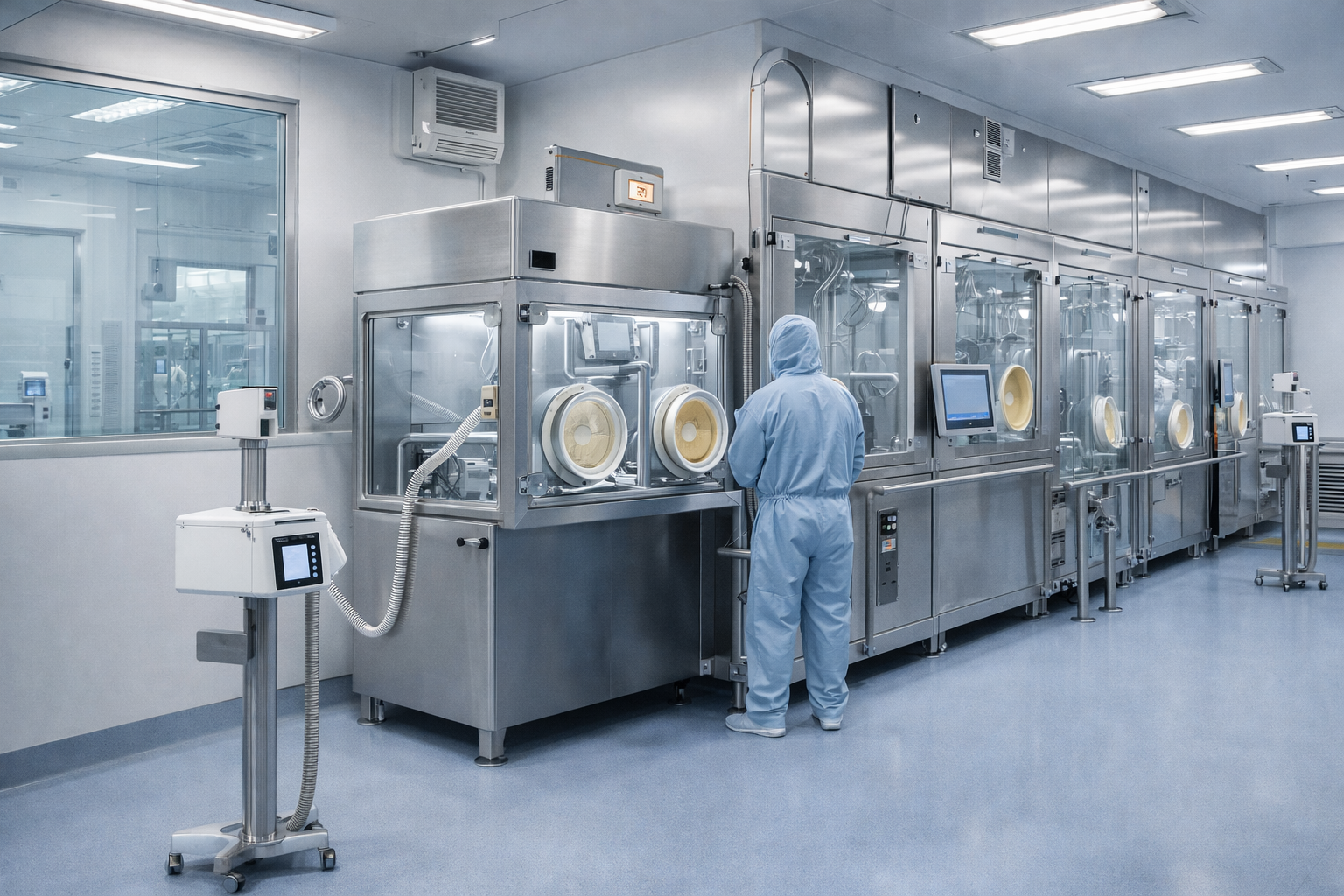
- Where the sampling head sits (in a cleanroom, on an isolator, within a restricted space)
- Where the controller sits (accessible for operators, separated for hygiene or space reasons)
- How sampling runs (short targeted samples vs longer monitoring strategies)
- How the system integrates (standalone, semi-integrated, fully integrated)
- How upgrades happen (without ripping up infrastructure or shutting down lines)
This isn’t about creating a bespoke science project every time. It’s about offering enough configuration options that you can build a solution that makes sense, quickly.
Why slit-to-agar supports flexibility particularly well
Slit-to-agar sampling has a few characteristics that lend themselves to flexible deployment:
- It’s a proven viable monitoring method with results that are easy to interpret and defend
- It supports longer sampling strategies when designed correctly
- It can be integrated into isolators and constrained builds without forcing awkward compromises
- It can work as part of a modular system, rather than a fixed “box”
When you can vary configuration without compromising the fundamentals of viable recovery, you give cleanroom teams what they really need: options.
A good way to sanity-check your system design
Here are three questions I often use when reviewing a monitoring setup:
1) If you could start again, would you place your sampling points in the same locations?
If the answer is “no”, the system may be driving your decisions more than risk is.
2) If you needed to upgrade, would it force shutdowns or major engineering work?
If yes, you’re carrying future cost and risk even if things feel stable today.
3) Can your monitoring strategy evolve as your process evolves?
If the system can’t adapt, you’ll end up with workarounds - and workarounds eventually fail.
The practical takeaway
A strong contamination control strategy is built on two things:
- clear rationale (why are you sampling here, in this way, at this frequency?)
- systems that support that rationale without creating unnecessary friction
If your monitoring system is rigid, you’ll end up bending your rationale around the system.
If your system is flexible, you can design the system around the risk.
That’s the difference.
If you want to explore this further
If you’re working on a new isolator build, a RABS project, a facility upgrade, or you’re simply trying to improve coverage without increasing disruption, it’s worth revisiting how much of your current approach is driven by design constraints.
We’re always happy to talk through options - not in a salesy way, but in a practical “does this fit your world?” way.
That’s what good engineering should feel like.
~ Gethin
SHARE POST
RECENT POSTS